 W&B
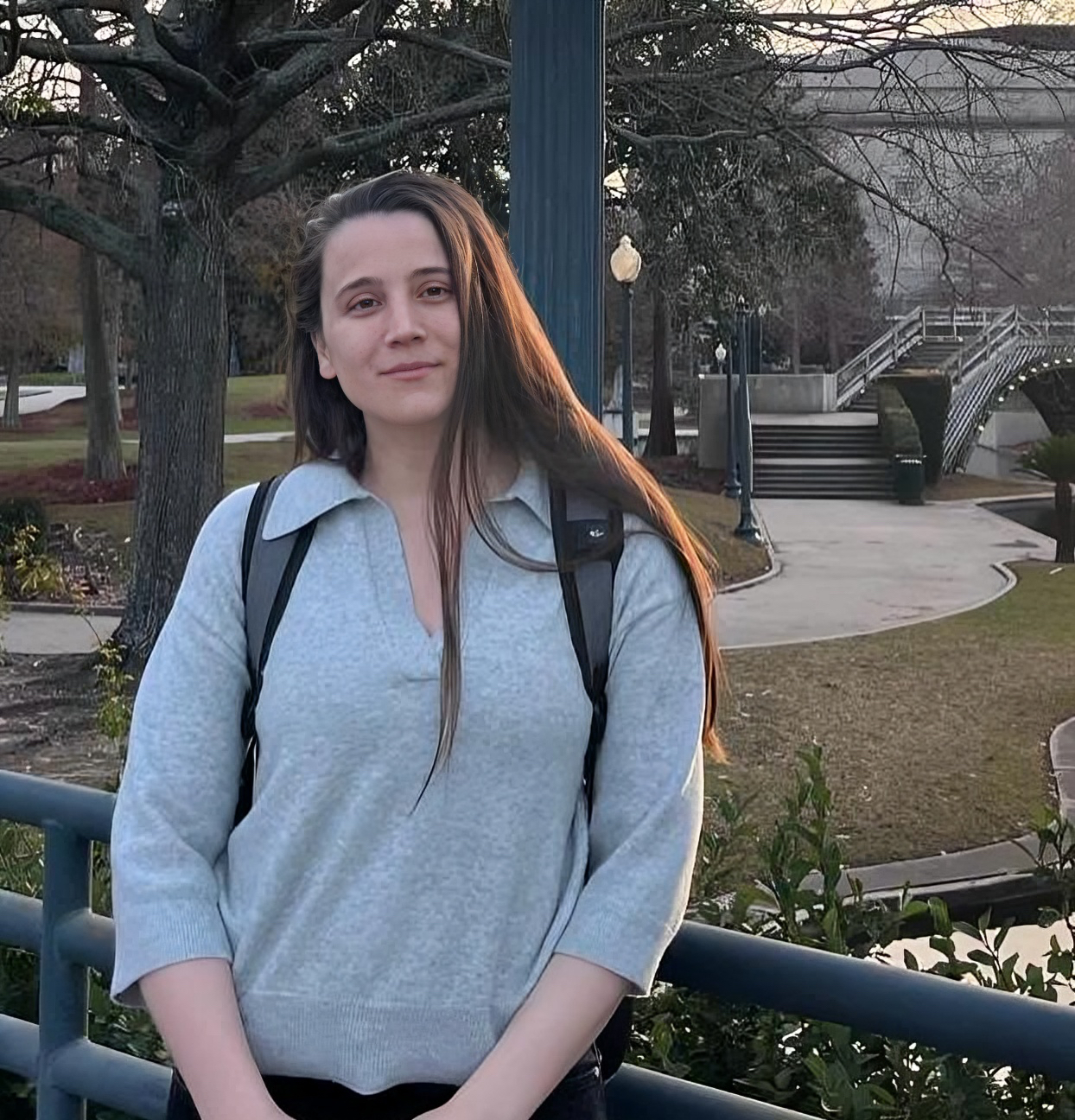
W&BI am a PhD candidate at the University of Rochester specializing in comparative politics and methodology.
My research examines media capture amid democratic erosion, focusing on how incumbents manipulate state resources to undermine the free press and how pro-government media shape their news reporting strategies. My work combines modern causal inference techniques with computational methods, drawing on a large corpus of news data that I collected during my PhD. I also share tools that I developed for my research, including CC-Downloader for collecting online news and Human Coding Dashboard for facilitating human annotation tasks.
I was a Democracy Center fellow for the 2025-2026 academic year. Before starting my PhD, I was a research associate at the University of Zurich, and I received an MA in Analytical Political Economy from Duke University and a BA in Economics and Sociology from Boğaziçi University.
Research
Working Papers
“Subsidizing the Messenger: How Connected Owners Shape Economic News”
“Do Voters Prefer Women and Young Candidates? Re-evaluating Evidence from Conjoint Experiments” with Scott F. Abramson, Under Review [R-Package]
Work in Progress
“Repression, Exit, and Voice in the Newsroom” with Horacio Larreguy
“Divergent News Environments: A Longitudinal Study Leveraging the Common Crawl Corpus”
“Internet Censorship and the Chilling Effect on Sensitive News Coverage”
Teaching
I have served as a Teaching Assistant in the Department of Political Science at the University of Rochester. In 2024, I received the Graduate Student Teaching Assistant Award.
PSCI 200: Data Analysis I
Term: Fall 2026 & Fall 2023 | Level: Undergraduate
Professor: Curtis S. Signorino
Course Topics: Descriptive statistics, distributions, confidence interval & hypothesis testing.
PSCI 238: Business and Politics
Term: Spring 2026 | Level: Undergraduate
Professor: David Primo
Course Topics: Non-market strategy for business, lobbying, corporate social responsibility.
PSCI 505: Quantitative Methods III
Term: Fall 2024 | Level: Graduate
Professor: Curtis S. Signorino
Course Topics: Maximum likelihood, survival analysis, Bayesian inference.
PSCI 282/482: Making Public Policy
Term: Fall 2024 | Level: Undergraduate / Graduate
Professor: Sergio Montero
Course Topics: Pareto concepts, externalities, coordination/commitment games.
PSCI 205: Data Analysis II
Term: Spring 2024 | Level: Undergraduate
Professor: Curtis S. Signorino
Course Topics: Bivariate/multivariate regression, maximum likelihood, experiments & causal inference.